

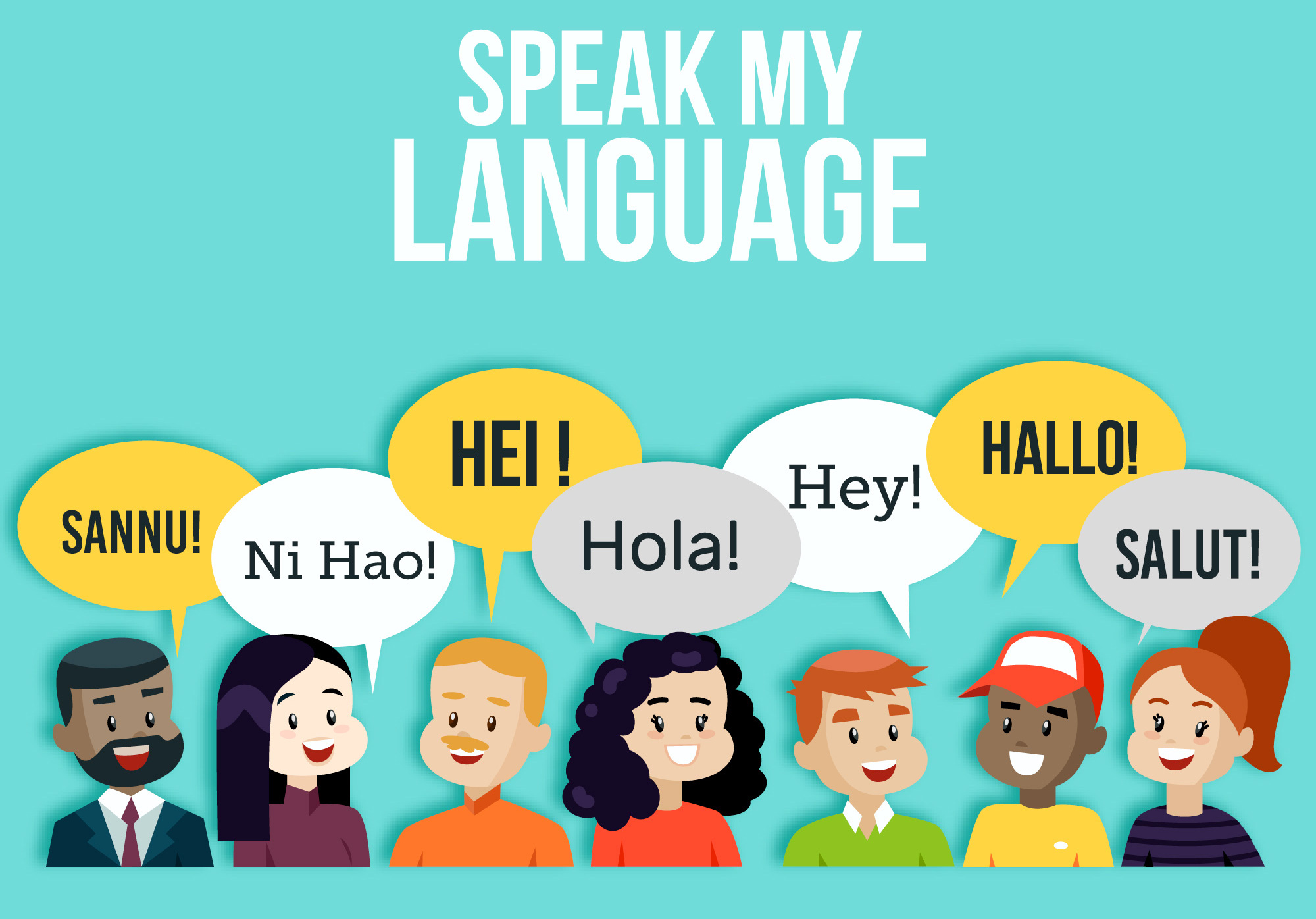
With the growth of internet, Artificial Intelligence and globalisation, language today is one of the most important communication aspects for businesses and organisations wanting to successfully reach their global audiences and partners.
Whether it is a website, product description, marketing campaign, email or customer support message, or business documents, the words you use can directly influence how people perceive your business.
For businesses operating internationally, communicating in English alone may not always be enough. As shown in recent research – customers are more likely to understand and engage with content when it is available in their preferred language.
More importantly, they expect the translation to be accurate, natural and relevant to their culture.
A poor translation can have the opposite effect. Instead of helping you reach a new audience, it can make your business appear unprofessional, unreliable or even careless.
This is why translation should not be treated as simply changing words from one language to another. In fact, professional language translations should be a carefully executed step of your business growth strategy. The meaning, tone and context all need to be considered.
In this post, our team speaks to some of the translation industry’s leading experts and discusses how language barriers and poor translations can affect your business, and why professional translation services can make a big difference in today’s globalised world.
So, let’s get started!
Why Do Translation Services Matter for Businesses?
When entering a new market, Businesses often focus on their products, prices and marketing strategies. However, communication is just as important.
Imagine visiting an online store where the product descriptions contain obvious grammatical mistakes. You find a product you like, but the payment instructions or returns policy are difficult to understand.
Would you feel comfortable entering your payment details?
Let’s be honest – the answer is most likely ‘no’.
Customers need to trust a business before they are willing to spend their money. If your website or marketing content contains poor translations, customers may question the quality of your products and services too.
A professional translation can help businesses communicate their message clearly while making their content feel more natural to international audiences. It can also help businesses avoid misunderstandings that could otherwise affect customer relationships.
Often, a professional translation for business content will also include a localisation services, which ensures that your business content is not only linguistically accurate, but also culturally appropriate.
To better understand why professional translations are so important for businesses today, we spoke to Nello Attianese, a specialist translation manager at TS24, a London-based translation agency providing services to some of the UK’s leading brands, corporations and locally based SMEs.
Speaking to Corporate Insight, Nello said that “At TS24, we can very clearly see a fast-growing recognition among businesses that professional translations are no longer simply a matter of directly converting words from one language to another. For majority of our clients, It’s about communicating accurately, effectively and appropriately with audiences in different markets, while ensuring that their brand’s message, tone and values remain consistent across languages and communication channels.”
And added: “As businesses expand internationally, high-quality translation can play a crucial role in building trust, strengthening relationships and ultimately supporting global growth.”
Based on Nello’s insights and expertise in the translation industry, we prepared a comprehensive list of 7 ways in which translation services can directly affect business growth, international success and customer-experience.
- Translation Quality Can Affect Customer Trust
Trust is essential in business, particularly when dealing with customers who are unfamiliar with your brand.
When a customer sees poorly translated content, they may assume that the business has not invested enough time or resources into serving their market.
For example, a website might contain:
- Incorrect grammar
- Spelling mistakes
- Confusing sentences
- Inconsistent terminology
- Literal translations
- Incorrect product information
Even if your business offers an excellent product, these mistakes can create a negative first impression.
Customers may also become concerned about more important information, such as payment terms, returns policies or privacy notices.
If customers cannot understand what they are agreeing to, they may simply leave the website.
This is one of the reasons why businesses should consider using professional translation services instead of relying entirely on automatic translation tools.
Machine translation can be useful for understanding basic information, but customer-facing content often requires human review to ensure the wording is accurate and natural.
- Language Barriers Can Reduce Sales
A customer cannot buy a product if they do not fully understand what they are purchasing.
This might sound obvious, but language barriers can affect businesses in several different ways.
Consider an online retailer selling products internationally. A potential customer visits the website but finds that the product information is only available in English. They may understand some of the content, but they might still have questions about the product’s features, size, materials, delivery options or returns policy.
Rather than spending time trying to understand everything, they may decide to purchase from another company.
This means that a business can lose a potential customer without even realising it.
Translating your website, product descriptions and other important information can make it easier for international customers to understand your offering and make purchasing decisions.
Of course, translation alone cannot guarantee more sales. However, removing unnecessary language barriers can make the buying journey much easier.
- Translation Can Affect the Customer Experience
Customer experience does not begin when someone purchases your product. It starts as soon as they interact with your business. And today, more than ever, customers strongly prefer a personalised experience, which includes use of their native language.
This could be through your website, social media, online advertisements, emails or customer support.
If these communications are difficult to understand, customers can become frustrated.
For example, imagine receiving an automated email explaining how to return an item, but the instructions have been translated incorrectly. The customer may follow the wrong steps and experience further problems.
This can lead to:
- More customer complaints
- Increased support requests
- Confusion about products or services
- Delayed purchases
- Negative reviews
- Lower customer satisfaction
Providing accurate translations throughout the customer journey can make communication much easier.
Businesses should consider translating the information customers are most likely to need, rather than focusing only on their homepage.
This could include FAQs, order confirmations, product manuals, customer support content and return policies.
- Your Brand Reputation Can Be at Risk
Your brand represents how customers perceive your business.
A company may have spent years building a strong reputation in its home market, but that reputation does not automatically transfer to another country.
Poorly translated marketing content can make an established business appear inexperienced.
This can be particularly problematic for companies operating in industries where trust and accuracy are important, such as finance, healthcare, law and professional services.
For example, a small error in a promotional slogan might seem harmless. However, a mistranslated legal term or product instruction could have much more serious consequences.
Businesses should therefore make sure their translation strategy reflects the importance of the content being translated.
Marketing copy may require creativity and cultural awareness, while legal or technical content may require specialist terminology and additional quality checks.
Using the same approach for every type of content is not always suitable.
- Literal Translation Doesn’t Always Work
One of the biggest misconceptions about translation is that every word has a direct equivalent in another language.
This is not always the case.
Languages contain idioms, expressions and cultural references that may not make sense when translated word for word.
For example, a phrase that sounds natural in English could sound strange or confusing when directly translated into another language.
The same applies to humour and advertising slogans.
A marketing campaign that works well in one country may not have the same effect somewhere else. In some cases, the translated version may even communicate a completely different message.
This is where localisation becomes important.
Localisation goes beyond translating words. It involves adapting content to suit the cultural and linguistic expectations of the target audience.
This can include:
- Currency
- Date and time formats
- Measurements
- Images
- Colours
- Cultural references
- Tone of voice
- Local terminology
The goal is to make the content feel as though it was created for that audience rather than simply translated for them.
- Online Reviews Can Highlight Translation Problems
Customers are increasingly willing to share their experiences online.
If an international customer has a poor experience because of confusing or inaccurate information, they may leave a negative review.
For example, a customer could complain that:
“the website information was impossible to understand”
or that
“the instructions were completely different from what was provided.”
Even one negative review may influence another potential customer, particularly if similar complaints appear repeatedly.
Businesses should monitor customer feedback to identify whether language is creating unnecessary problems.
Reviews, customer support enquiries and website analytics can all provide useful information about how international customers interact with your business.
If customers repeatedly ask the same questions because information is unclear, it could be a sign that your translated content needs improvement.
- Professional Translation Services Can Help
There are many translation tools available today, and they can be useful for quick or informal translations.
However, businesses should be more careful when translating content that directly affects customers.
Professional translators can consider the context behind the words rather than simply translating them individually.
They can also identify terminology that may need to be adapted for a particular industry or audience.
Depending on your requirements, you may need:
- Website translation
- Marketing translation
- Legal translation
- Technical translation
- Financial translation
- Certified translation
- Document translation
- Localisation services
Human review is particularly valuable for important customer-facing content because even a small mistake can change the meaning of a sentence.
A professional translation service can also help businesses maintain consistency across different documents and platforms.
How Can Businesses Avoid Translation Problems?
The first step is to identify which content your international customers actually need.
Start with your website and look at the pages that influence purchasing decisions. Product information, pricing, delivery details, FAQs and contact information are often important areas to consider.
You should also review your marketing campaigns and customer support materials.
Once you know what needs translating, choose the appropriate language for your target market and make sure the translator understands your industry.
It is also important to review translated content before publishing it. Your translation should not only be grammatically correct but should also communicate the same message as the original.
Finally, remember that translation is not a one-time process. Businesses update their websites, launch new products and change their policies regularly. Your translated content should be reviewed and updated accordingly.
Conclusion
Language barriers can have a bigger impact on the business industry than many companies realise.
A customer may leave your website because they cannot understand the product information. Another may lose trust because the translated content contains obvious mistakes. Someone else may have a poor customer experience because the instructions they received were unclear.
These problems can affect sales, customer satisfaction and brand reputation.
Professional translation services can help businesses communicate more effectively with international audiences while reducing the risk of misunderstandings.
If you are planning to expand into a new market, translation should be considered an important part of your strategy rather than an afterthought.
After all, reaching international customers is only the first step. Making sure they understand, trust and feel comfortable with your business is what can turn an international visitor into a customer.


